
Differences between Square Dry Deck Fountains and Pool Fountains
What exactly is the difference between a dry fountain and a pool fountain in a plaza?
Fountain builders are often asked by clients: “Which is better—a dry fountain or a pool fountain?” In fact, the difference can be summed up in one sentence: in a dry fountain, the water is hidden underground; in a pool fountain, the water is visible above ground. But the differences between the two go far beyond that—from design concepts to construction difficulty to ongoing maintenance, they differ in every aspect.
I. Structure and Space Utilization
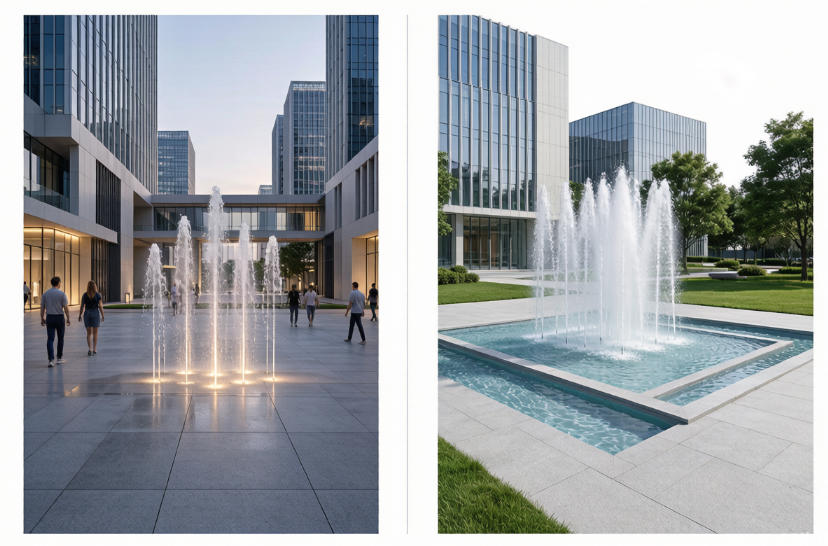
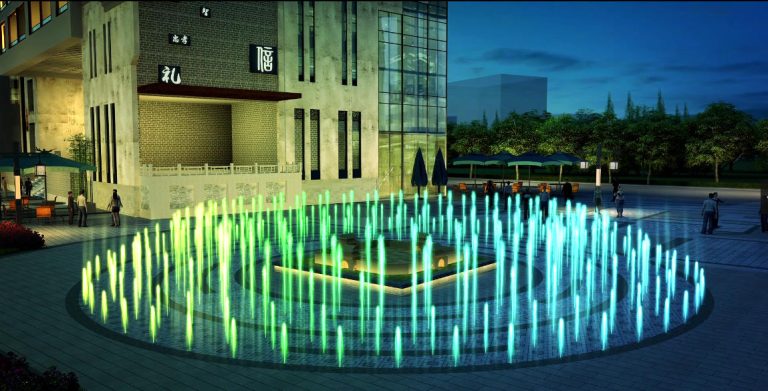
A dry fountain features a sunken structure. The nozzles, pumps, filtration system, circulation piping, and underwater lights are all buried in an underground reservoir. Only a grate or perforated plate remains above ground. When the fountain is in operation, water surges up from below; when it’s turned off, the surface remains level as usual, allowing people to walk and activities to proceed as normal. Commercial plazas, pedestrian streets, and large atriums value this feature most highly—zero space is wasted, and the fountain and the plaza can coexist seamlessly. A Wanda atrium installed a dry fountain; during the day, performances attract crowds, and at night, when the fountain is turned off, the space is immediately repurposed for promotions, car shows, and children’s play areas—none of which would be possible if the same area were occupied by a traditional water basin.
Pool fountains feature an enclosed structure. They require only shallow ground excavation, primarily for the pool walls and bottom, making the civil engineering work relatively simple. However, waterproofing the pool is the critical challenge—leaks are the most common issue. The water itself occupies space, and such designs inherently do not allow for space reuse. To use an analogy: a dry fountain is like a refrigerator built into the wall, while a pool fountain is like a refrigerator placed on the floor. The former looks good but isn’t cheap; the latter is straightforward but requires constant maintenance.
II. Experience and Safety
The charm of dry-land fountains lies in their interactive nature. On summer evenings, children dart between the water jets while adults splash along with them—they can touch the water, kick the jets, and take photos, making for a highly interactive experience. However, the design requirements are stricter: the ground must be treated to prevent slipping, the size of the spray nozzles must be controlled to prevent pinched toes, and the water must be regularly disinfected and changed.
Pond fountains are designed for spectators. Viewers stand outside the railing to watch the water spray, listen to music, and admire the changing lights—it’s beautiful, but you can’t step inside. Safety hinges on drowning prevention—railing height, water depth control, and warning signs are all essential.
III. Maintenance and Cost
The pitfall of in-ground fountains: Beneath the grating lies a hidden space where leaves, cigarette butts, and small pebbles can fall—you can’t see them unless you lift the grating. Regular cleaning is essential; otherwise, nozzles will become clogged and pumps damaged. If waterproofing in the underground equipment shaft fails, repair costs are exorbitant. Initial civil engineering costs are high, with excavation, waterproofing, and grating often accounting for half of the total cost.
Pit in a Water Feature: The water surface is exposed to the air, so dust, fallen leaves, and bird droppings fall into it daily. Algae grow in summer and ice forms in winter, making water quality maintenance a daily task. Large pools require at least one thorough dredging per year, and labor and chemicals are ongoing expenses. The advantage is a low initial investment threshold.
Bottom line: Hidden dry fountains are hard to maintain, while exposed water features are hard to keep in good condition. When discussing proposals with the client, emphasize that dry fountains require a one-time investment but offer long-term peace of mind, while water features have a low entry barrier and deliver quick results.
IV. How to Choose
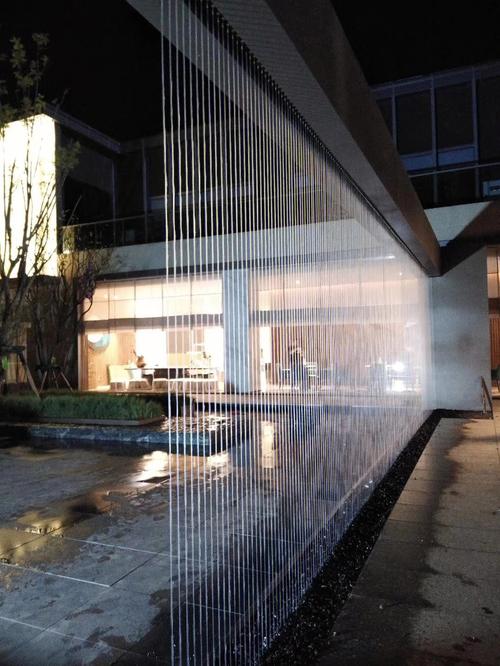
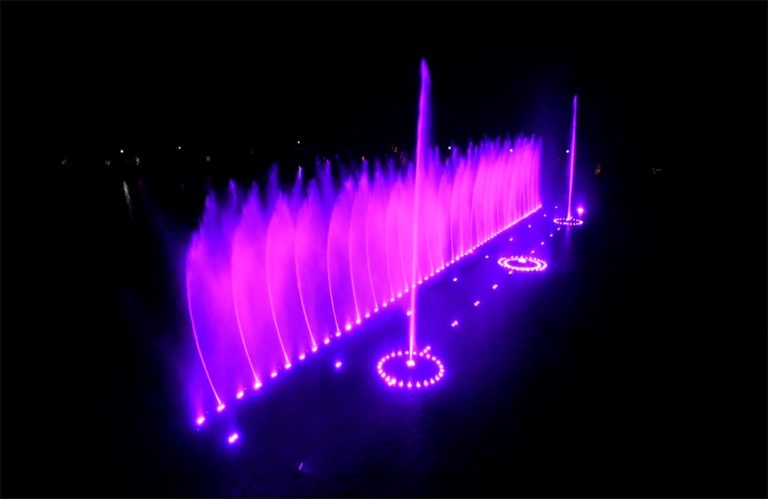
Choose a dry-land fountain: For commercial plazas, pedestrian streets, or atriums where interactive experiences and multi-purpose use are desired, and the budget is ample. Choose a water-based fountain: For parks, municipal plazas, or residential community entrances where the water surface itself is the central feature, the budget is limited, and the focus is on visual displays, performances, and the combination of lighting and water curtains.
There’s no absolute “better” or “worse” between dry-land and pool fountains—it’s all about suitability. Don’t get hung up on which is better; just ask yourself one question: What kind of water does this plaza really need?
Lishi Fountains has specialized in musical fountains and water feature engineering for over twenty years. We design and build both dry-land and pool fountains, offer free preliminary proposals, and are always available to discuss your project.