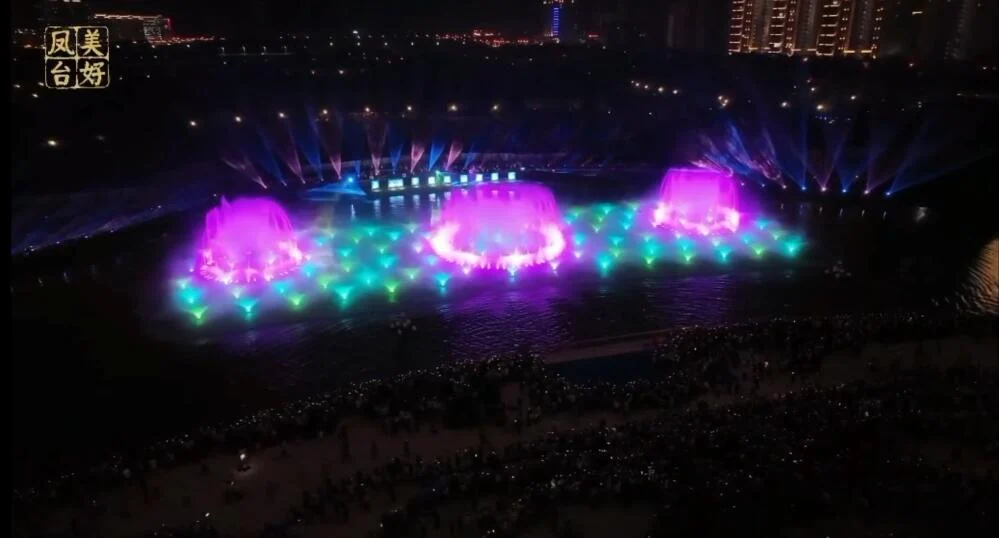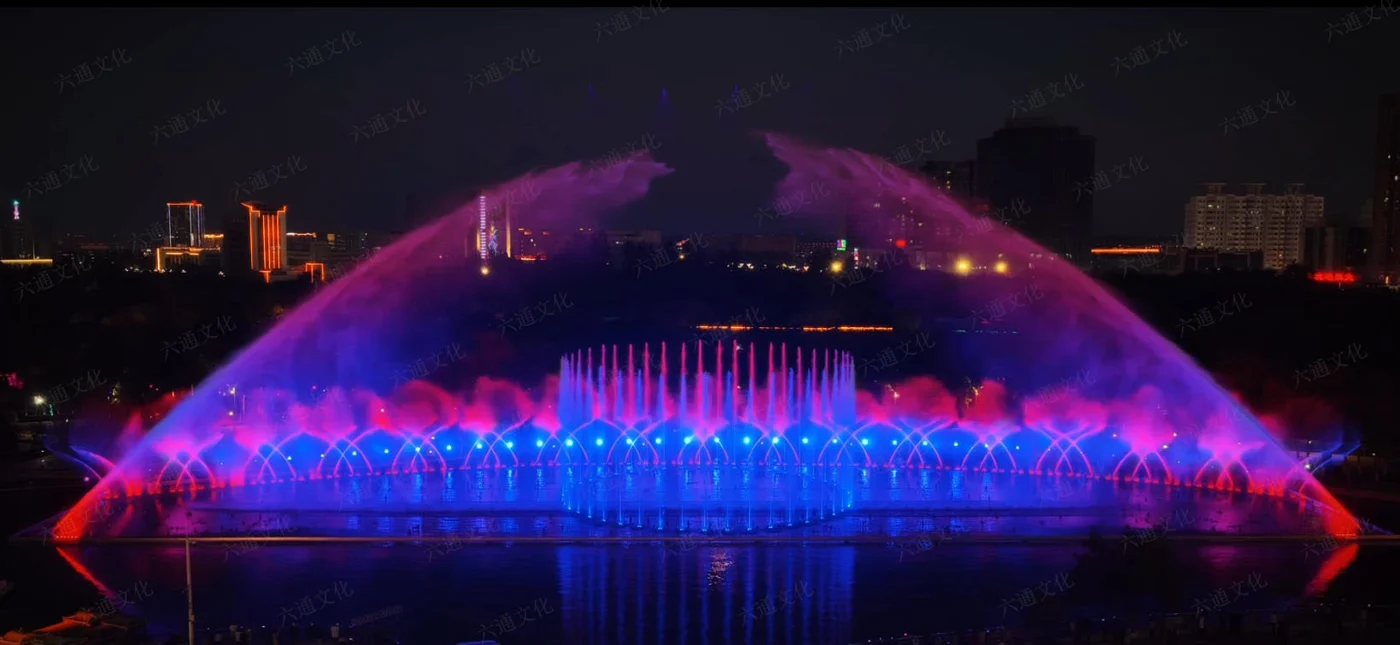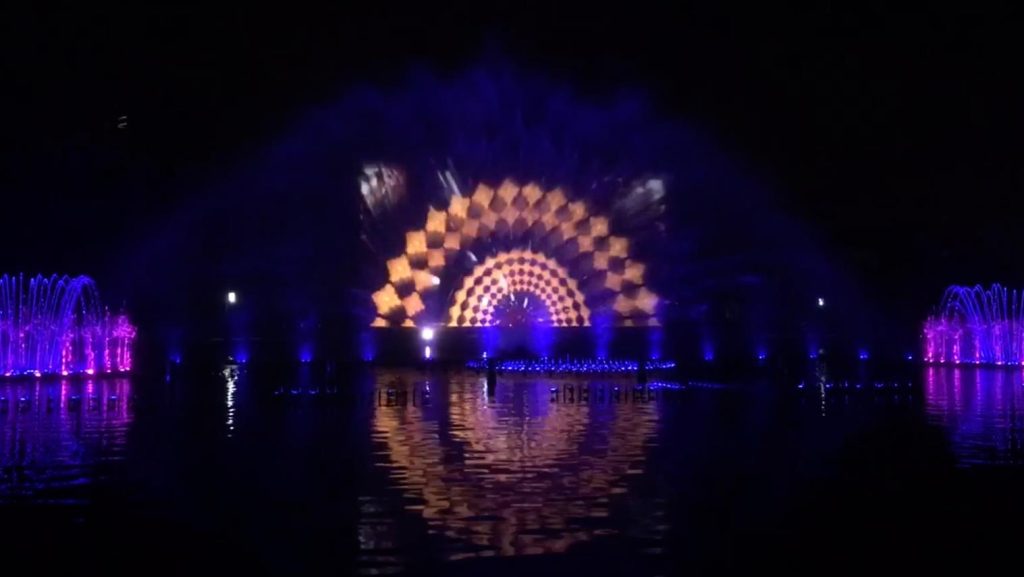
From 316L stainless steel nozzles to IP68 submersible pumps, we supply robust hardware built for long-term municipal reliability.
Comprehensive water feature types engineered to European standards, ensuring long-term durability and minimal maintenance.
In-house CAD engineering, fluid dynamics calculation, and artistic choreography for your project.
Explore our landmark installations integrating advanced multimedia and hydraulic engineering.
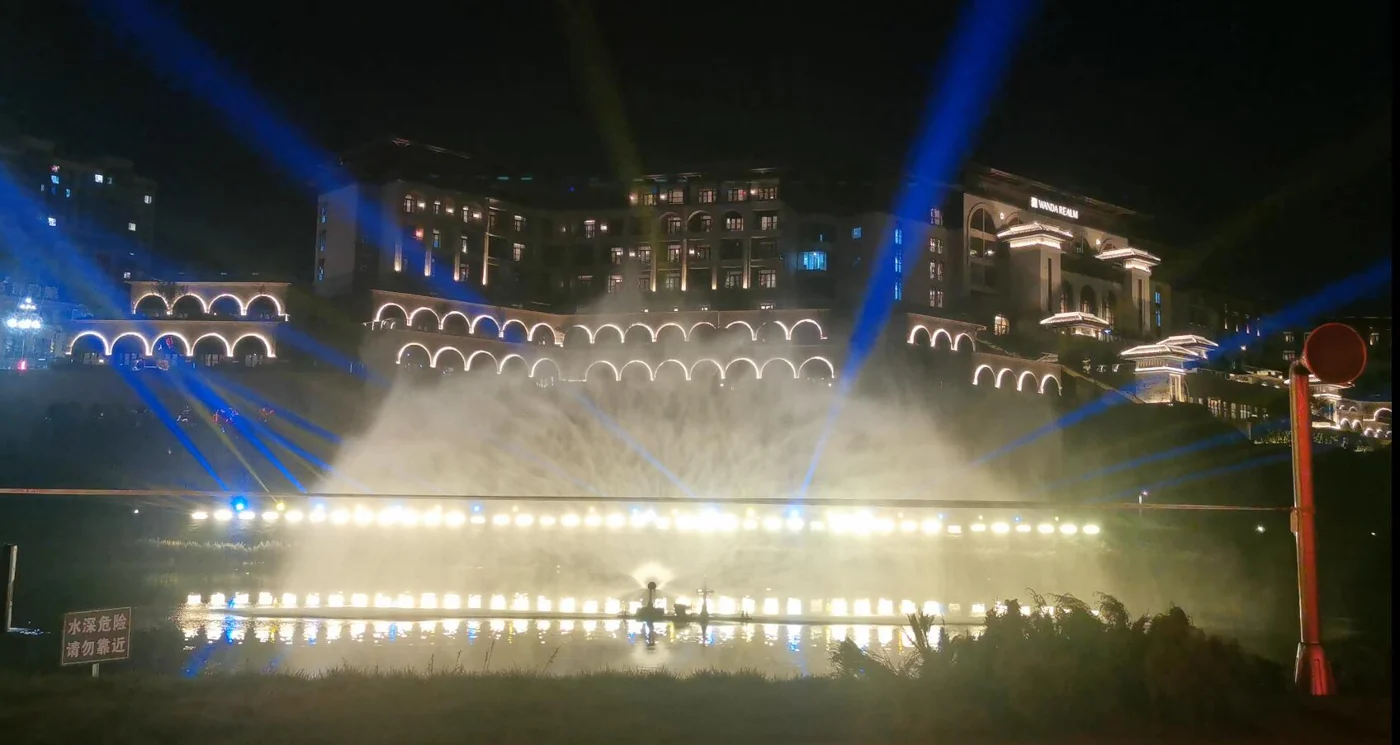
Lake musical fountai...
1、Water screen movie...
1. Project Overview ...
I. Four Core Principles of Musical Fountain Design
Professional musical fountain design rejects cookie-cutter approaches and must balance artistic impact with practical application, adhering to the following four core principles:
1. Principle of Site Adaptation
Tailor solutions based on the site’s scale and purpose. Public squares are suited for large-scale matrix fountains and ultra-high-reach fountains; riverfront landscape areas are suited for linear flowing water features; commercial and indoor settings should use compact, low-noise water features; Cultural and tourism attractions feature themed fountain shows that align with the site’s character and usage requirements.
2. Principle of Synchronization of Sound, Light, Electricity, and Water
The core objective is to achieve four-dimensional synchronization of sound, light, electricity, and water. Through precise program control, water patterns and lighting colors dynamically change in time with the music’s rhythm—soothing melodies are paired with gentle water features, while energetic music styles are matched with dynamic water effects such as leaping jets and explosive bursts, creating a unified audiovisual experience.
3. Safety and Stability Principle
All underwater equipment meets the IP68 waterproof standard, and electrical circuits are equipped with ground fault and overload protection devices. The pool structure and equipment layout are optimized, with designs incorporating corrosion resistance, waterproofing, and short-circuit prevention to eliminate safety hazards and ensure long-term, stable operation of the equipment as well as pedestrian safety.
4. Energy Efficiency and Easy Maintenance Principle
Energy-efficient variable-frequency pumps and low-power LED underwater lights are selected, paired with a smart timed start-stop system to reduce energy consumption. Equipment locations are strategically planned with maintenance space reserved to simplify operation and maintenance procedures and reduce long-term operating costs.
II. Standard Design Process for Musical Fountains
A well-developed musical fountain design consists of five core steps, each ensuring the successful implementation of the final effect:
1. Site Survey and Requirements Analysis: Survey site dimensions, water quality, power supply, and environmental conditions; clarify the project budget, scene positioning, and performance requirements; and determine the fountain’s scale and style.
2. Thematic Artistic Conceptualization: Integrating local culture and project characteristics, plan water pattern combinations, lighting color schemes, and musical styles; choreograph a rhythmically varied performance to create a unique landscape theme.
3. Technical Detailed Design: Refine plans for the water system, lighting, electrical controls, piping, and wiring; optimize spray angles and heights based on wind speed and spatial parameters to address issues such as water overspray and limited visual effects.
4. Construction, Installation, and Implementation: Complete civil engineering, piping installation, and equipment installation according to the drawings; implement waterproofing, corrosion protection, and reinforcement measures to mitigate construction risks.
5. Programming, Debugging, and Acceptance: Input customized music tracks; debug the synchronization of sound, light, electricity, and water; conduct repeated test runs to fine-tune parameters; correct any errors; and finally complete acceptance and handover.
III. Key Points of Core System Design
The quality of a musical fountain is determined by four core systems. The key design points are summarized as follows:
1. Water Feature Shaping System
This system combines diverse water forms—such as surging fountains, swaying water, flowing water, air-burst fountains, and super-high fountains—to create rich layers through a layout that alternates between high and low elevations and blends dynamic and static elements. It utilizes 304 stainless steel nozzles and silent variable-frequency pumps that adapt to different musical rhythms, ensuring durability and low noise levels.
2. Lighting Rendering System
IP68-rated RGBW full-color LED underwater lights are used, supporting effects such as color gradients, strobing, and follow-spot lighting. Adhering to the design logic of “changing colors with the music and adapting to the water’s light and shadow,” the system enhances the nighttime landscape’s ambiance and sense of depth through the alternation of warm and cool colors.
3. Intelligent Control System
Serving as the fountain’s central “brain,” the digital control system captures musical rhythms with millisecond precision and coordinates all equipment. It supports multiple preset programs, scheduled operations, and remote control; high-end solutions can incorporate environmental sensing and interactive controls to meet both routine and customized performance needs.
4. Safe Power Supply System
The system employs zoned, independent power supply with waterproof distribution boxes and protective devices, and all wiring undergoes sealed, waterproof, and flame-retardant treatment. A complementary water circulation and filtration system prevents nozzle clogging and equipment corrosion, reducing the likelihood of malfunctions.
IV. Key Focus Areas for Custom Design in Mainstream Scenarios
Design priorities vary by scenario; precise customization is essential to maximize value:
Urban Squares: Grand and majestic with high visual appeal; large-scale layouts and high-jet water displays are suitable for public viewing, while the system is stable, durable, and low-maintenance.
Cultural and Tourism Attractions: Themed and narrative-driven, integrating light and shadow, water mist, and laser effects to create immersive water-based performances that attract nighttime visitors.
Commercial Complexes: Dynamic and fashionable with a lively rhythm, paired with popular music to enhance interactive experiences and boost foot traffic.
Landscaped Residential Communities: Gentle and serene, featuring gushing fountains and soft, gradually changing lighting with low noise and minimal water spray, designed to complement the natural ecological landscape.

After 15 years in the fountain business, here is what we have learned: the difference between a plaza that draws crowds every evening and one that sits dead is almost always decided at the design stage. Not the budget stage.
Walk through any city plaza at dusk and you will notice a pattern. The spot where people gather, linger, take photos, and bring their kids? It is almost never the sculpture garden. It is the fountain. A well-designed musical fountain turns a concrete square into a living room for the city. But that kind of magnetic pull is not an accident. It is engineered.
This article is not theory. It is what we have seen across 1000+ projects, distilled into the six design decisions that actually determine whether a plaza fountain works — or becomes an expensive wet patch nobody visits.
A common request from first-time clients: “Make it grand.” In design terms, that does not mean shooting water higher. It means layering.
Effective plaza fountain choreography follows a three-tier structure:
These three tiers need meaningful height separation and tempo contrast between them. If everything fires at the same height, the eye flattens the scene into a white blur. The audience loses interest in 30 seconds.
Lesson from the field: A plaza fountain is not a theater show. People walk around it, stand close to it, watch it from multiple angles. Good choreography holds attention for 10 minutes, not 10 seconds. It rewards repeat viewing. That is a rhythm question, not an equipment question.
There is a saying in this industry: hardware sets the floor, control sets the ceiling. The best pumps and nozzles in the world will not dance if the brain behind them cannot keep time.
| Dimension | DMX Control System | Legacy PLC Control |
|---|---|---|
| Music sync precision | Millisecond-level, frame-accurate | Second-level, threshold-triggered |
| Programming workflow | Timeline editor, WYSIWYG | Ladder logic, long debug cycles |
| Scalability | Modular, add channels anytime | Limited by physical I/O count |
| Maintenance | Remote diagnostics and firmware updates | On-site technician required |
| Best fit | Musical fountains, synchronized light shows | Simple recirculating water features |
If your plaza fountain needs to perform choreographed shows with music and lighting, DMX control is not optional. A PLC cannot handle complex audio-visual synchronization at the frame level. This is a hardware constraint, not something you can patch around with settings.
A clear trend has emerged across municipal plazas and commercial developments over the last few years: traditional basin fountains are being replaced by dry deck systems. The logic is straightforward and hard to argue with:
But dry deck design has its own complexity. Jet height, spray angle, splash recovery, waterproofing of the underground equipment vault — every parameter matters. In cold climates particularly, freeze-thaw cycles exert real stress on subsurface piping. The design has to account for soil movement at negative temperatures from day one.
A traditional fountain installation is a one-shot deal: dig a basin, lay pipe, install equipment, and that is it. But plazas evolve. Surrounding retail changes. Event programming shifts. Seasonal music rotations happen. When the use case changes, the fountain needs to adapt with it — or it becomes obsolete.
A modular fountain treats water effects, lighting units, and control nodes as independent, swappable building blocks. The benefits are immediate and lasting:
Important distinction: Modular does not mean bolt-together. Real modularity means standardized interfaces from pump to nozzle to light fixture to control cable. Every module is pre-assembled and pre-tested at the factory. On site, it is drop in place → connect power → connect water. Nothing more. This single decision affects both your delivery timeline and your project failure rate more than most clients realize.
A plaza fountain does 80% of its work after sunset. During the day, people see water. At night, they see light. Treat lighting as an afterthought and you are leaving half your investment on the table.
Four rules we follow on every project:
This is the least glamorous part of fountain design. It is also why fountains die young.
Fountain water collects sediment, leaves, microorganisms, and mineral deposits. Left unmanaged, these clog nozzles, erode pump impellers, and scale up pipes. A hundred-thousand-dollar system running at 50% capacity three years later is not a maintenance failure — it is a design failure that happened before anyone turned a valve.
What to plan for at the design stage:

In today’s increasingly competitive cultural and tourism landscape, musical fountains in scenic areas have become a key tool for attracting visitors, extending their stay, and enhancing brand recognition through the multidimensional artistic fusion of “sound, light, water, and shadow.” As a team specializing in the design and construction of musical fountains for scenic areas, we have deepened our expertise in the cultural and tourism sector for many years and successfully delivered over a hundred landmark projects. This article will provide an in-depth analysis of the planning key points, technical challenges, and operational value of scenic area musical fountains, helping you capture the next wave of growth in the cultural and tourism sector!
I. Scenic Area Musical Fountains: An Experience Upgrade from “Spectacle” to “Immersion”
A Powerful Tool for Driving Traffic and Boosting Efficiency:
Data shows that high-quality musical fountains can increase visitor traffic to scenic areas by 25%–40%, with a significant rise in revenue from repeat spending.
A Core Driver of the Nighttime Economy: Through nighttime fountain light and sound shows, visitor dwell time is extended by 2–3 hours, driving spending on dining and lodging.
A New Window for Cultural Expression:
By integrating local cultural IP (such as historical legends, natural ecosystems, and folk customs), we create a unique “scenic area storytelling show.”
Innovative Interactive Experiences:
Interactive designs—such as controlling fountain patterns via a mobile app and scanning QR codes to request songs—enhance visitor engagement and encourage word-of-mouth sharing.
II. Five Core Technologies for the Design and Construction of Scenic Area Musical Fountains
Professional companies specializing in the design and construction of scenic area musical fountains must overcome the following technical barriers:
Precise Audio-Visual Synchronization System:
Utilizing DMX512 intelligent control technology to achieve millisecond-level synchronization between music rhythms, water pattern changes (such as running fountains, mist forests, and water curtains), and laser projections.
Eco-Friendly Design:
Low-noise pumps combined with a recirculating water purification system minimize disruption to the scenic area’s ecological environment.
Gravity-fed water supply systems designed to utilize natural elevation differences reduce energy consumption by over 30%.
All-Weather Wind and Interference Resistance:
Customized wind-resistant nozzle arrays and waterproof LED light clusters are designed for outdoor scenic areas to ensure stability during extreme weather conditions.
Multidimensional Sensory Integration:
Combined with AR (Augmented Reality) technology, visitors can use their smartphones to scan the fountain and trigger virtual effects, creating an immersive “blending of the real and virtual” experience.
Smart Operations and Maintenance Management:
An IoT remote monitoring platform continuously monitors water quality and equipment status, providing early warnings of potential failures to reduce operational and maintenance costs.

No news updates at this time.
Submit your project drawings, dimensions, or initial concepts. Our engineering team will review the technical feasibility within one business day.