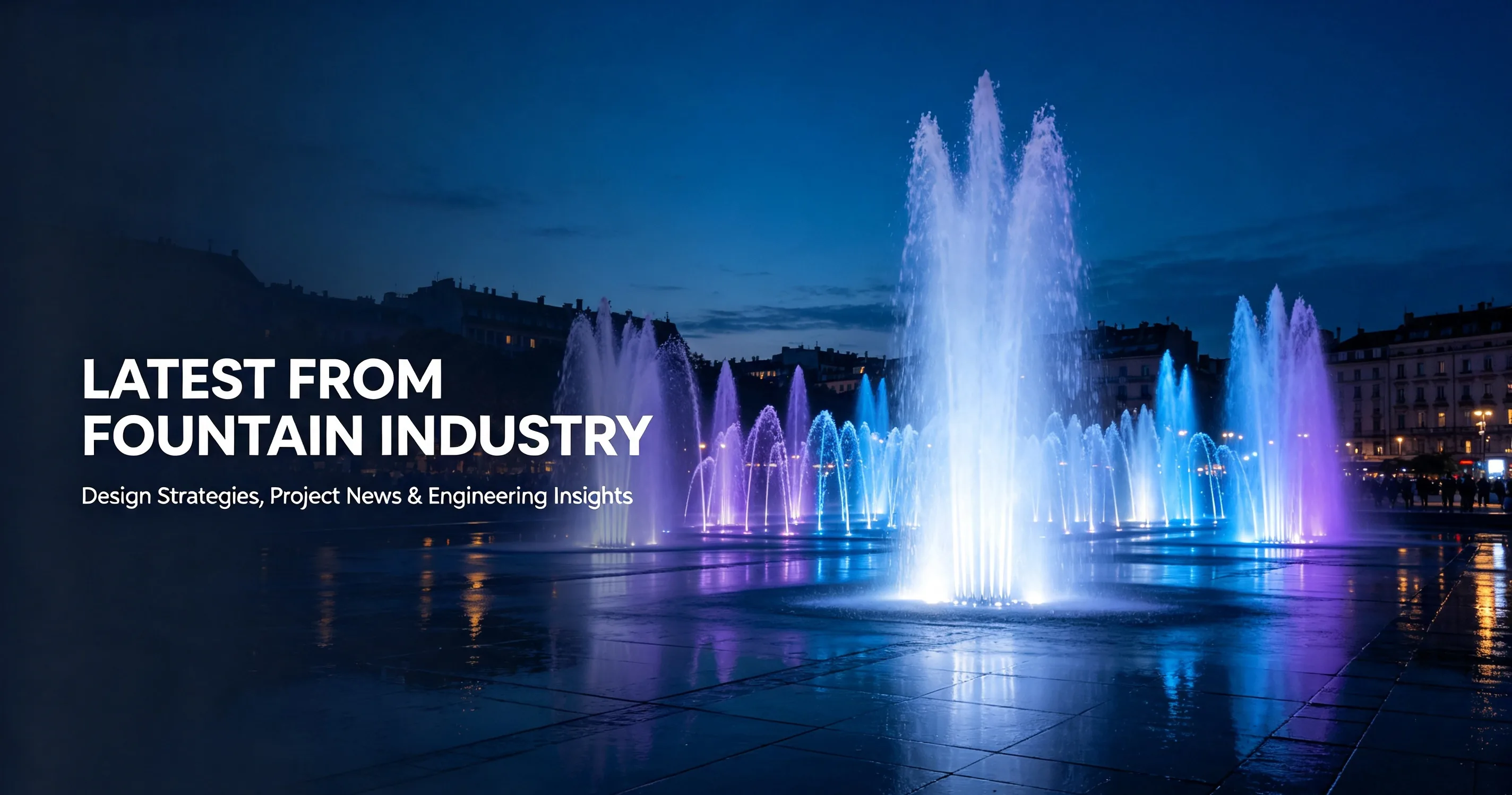
Musical Fountain Design: Music Synchronization, Control & Hydraulic Layout
I. Four Core Principles of Musical Fountain Design
Professional musical fountain design rejects cookie-cutter approaches and must balance artistic impact with practical application, adhering to the following four core principles:
1. Principle of Site Adaptation
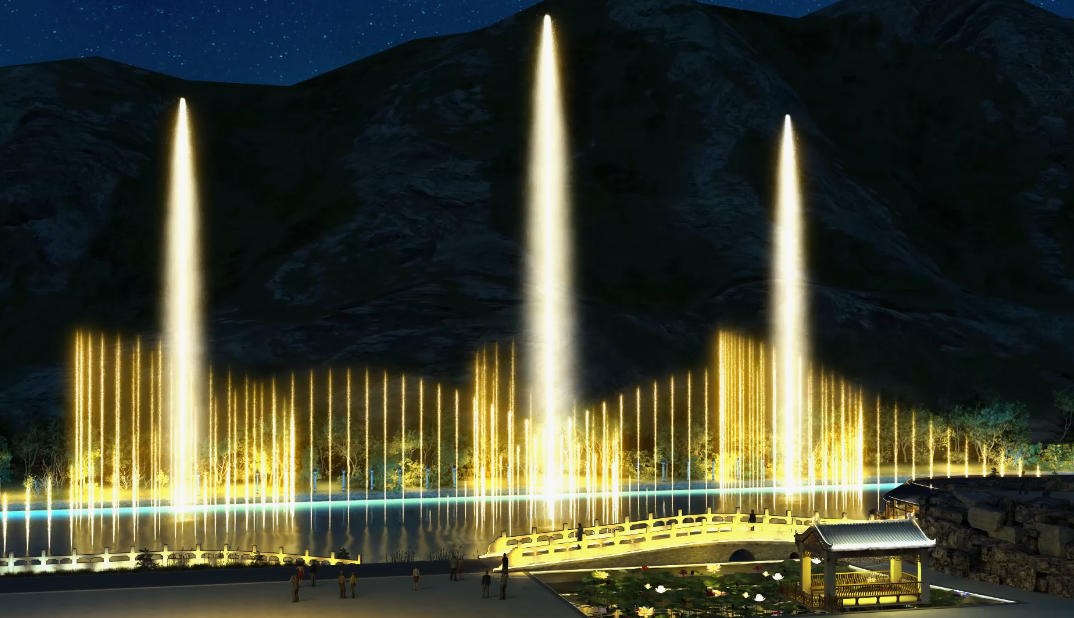
Tailor solutions based on the site’s scale and purpose. Public squares are suited for large-scale matrix fountains and ultra-high-reach fountains; riverfront landscape areas are suited for linear flowing water features; commercial and indoor settings should use compact, low-noise water features; Cultural and tourism attractions feature themed fountain shows that align with the site’s character and usage requirements.
2. Principle of Synchronization of Sound, Light, Electricity, and Water
The core objective is to achieve four-dimensional synchronization of sound, light, electricity, and water. Through precise program control, water patterns and lighting colors dynamically change in time with the music’s rhythm—soothing melodies are paired with gentle water features, while energetic music styles are matched with dynamic water effects such as leaping jets and explosive bursts, creating a unified audiovisual experience.
3. Safety and Stability Principle
All underwater equipment meets the IP68 waterproof standard, and electrical circuits are equipped with ground fault and overload protection devices. The pool structure and equipment layout are optimized, with designs incorporating corrosion resistance, waterproofing, and short-circuit prevention to eliminate safety hazards and ensure long-term, stable operation of the equipment as well as pedestrian safety.
4. Energy Efficiency and Easy Maintenance Principle
Energy-efficient variable-frequency pumps and low-power LED underwater lights are selected, paired with a smart timed start-stop system to reduce energy consumption. Equipment locations are strategically planned with maintenance space reserved to simplify operation and maintenance procedures and reduce long-term operating costs.
II. Standard Design Process for Musical Fountains
A well-developed musical fountain design consists of five core steps, each ensuring the successful implementation of the final effect:
1. Site Survey and Requirements Analysis: Survey site dimensions, water quality, power supply, and environmental conditions; clarify the project budget, scene positioning, and performance requirements; and determine the fountain’s scale and style.
2. Thematic Artistic Conceptualization: Integrating local culture and project characteristics, plan water pattern combinations, lighting color schemes, and musical styles; choreograph a rhythmically varied performance to create a unique landscape theme.
3. Technical Detailed Design: Refine plans for the water system, lighting, electrical controls, piping, and wiring; optimize spray angles and heights based on wind speed and spatial parameters to address issues such as water overspray and limited visual effects.
4. Construction, Installation, and Implementation: Complete civil engineering, piping installation, and equipment installation according to the drawings; implement waterproofing, corrosion protection, and reinforcement measures to mitigate construction risks.
5. Programming, Debugging, and Acceptance: Input customized music tracks; debug the synchronization of sound, light, electricity, and water; conduct repeated test runs to fine-tune parameters; correct any errors; and finally complete acceptance and handover.
III. Key Points of Core System Design
The quality of a musical fountain is determined by four core systems. The key design points are summarized as follows:
1. Water Feature Shaping System
This system combines diverse water forms—such as surging fountains, swaying water, flowing water, air-burst fountains, and super-high fountains—to create rich layers through a layout that alternates between high and low elevations and blends dynamic and static elements. It utilizes 304 stainless steel nozzles and silent variable-frequency pumps that adapt to different musical rhythms, ensuring durability and low noise levels.
2. Lighting Rendering System
IP68-rated RGBW full-color LED underwater lights are used, supporting effects such as color gradients, strobing, and follow-spot lighting. Adhering to the design logic of “changing colors with the music and adapting to the water’s light and shadow,” the system enhances the nighttime landscape’s ambiance and sense of depth through the alternation of warm and cool colors.
3. Intelligent Control System
Serving as the fountain’s central “brain,” the digital control system captures musical rhythms with millisecond precision and coordinates all equipment. It supports multiple preset programs, scheduled operations, and remote control; high-end solutions can incorporate environmental sensing and interactive controls to meet both routine and customized performance needs.
4. Safe Power Supply System
The system employs zoned, independent power supply with waterproof distribution boxes and protective devices, and all wiring undergoes sealed, waterproof, and flame-retardant treatment. A complementary water circulation and filtration system prevents nozzle clogging and equipment corrosion, reducing the likelihood of malfunctions.
IV. Key Focus Areas for Custom Design in Mainstream Scenarios
Design priorities vary by scenario; precise customization is essential to maximize value:
Urban Squares: Grand and majestic with high visual appeal; large-scale layouts and high-jet water displays are suitable for public viewing, while the system is stable, durable, and low-maintenance.
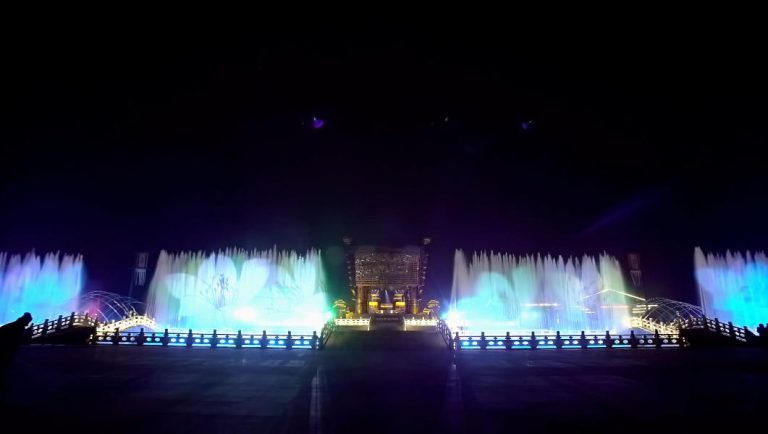
Cultural and Tourism Attractions: Themed and narrative-driven, integrating light and shadow, water mist, and laser effects to create immersive water-based performances that attract nighttime visitors.
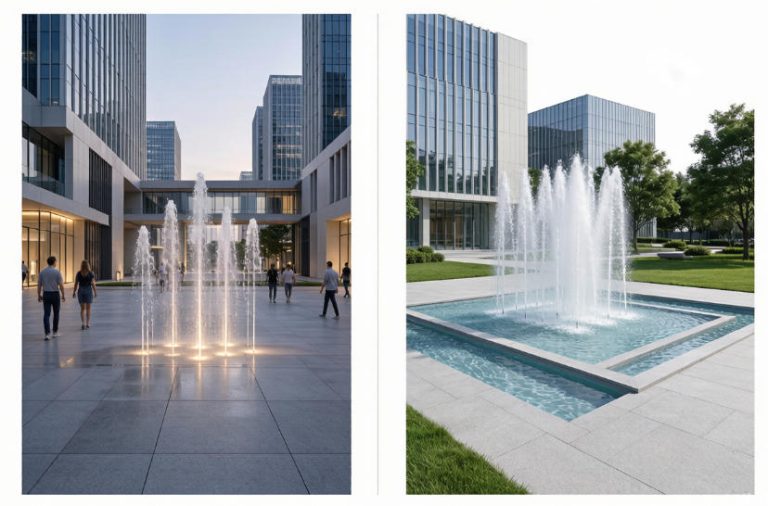
Commercial Complexes: Dynamic and fashionable with a lively rhythm, paired with popular music to enhance interactive experiences and boost foot traffic.
Landscaped Residential Communities: Gentle and serene, featuring gushing fountains and soft, gradually changing lighting with low noise and minimal water spray, designed to complement the natural ecological landscape.