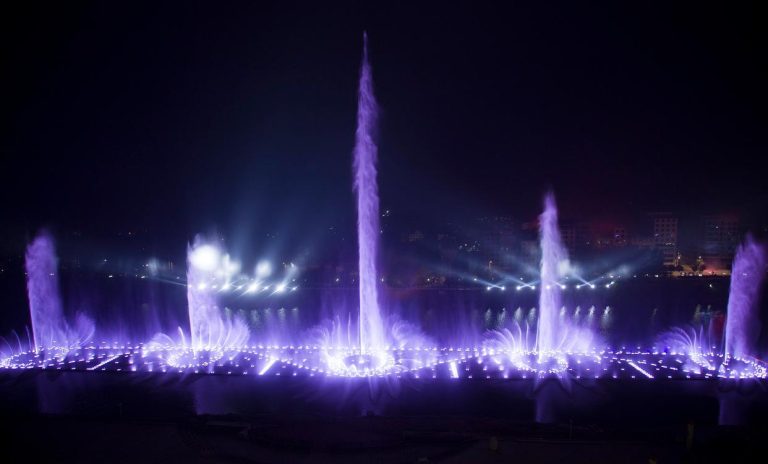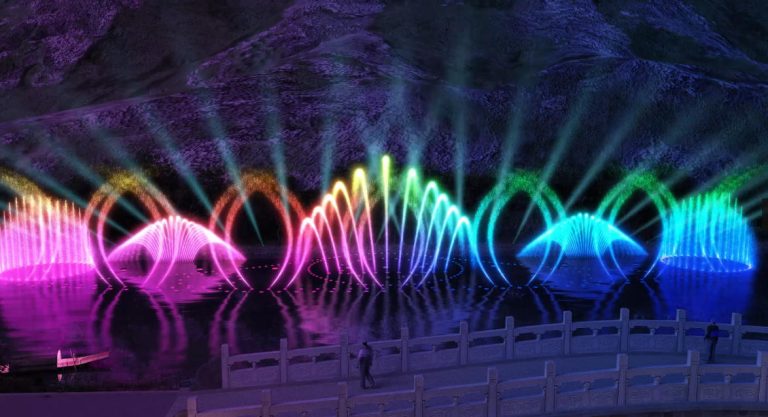
Commercial & Architectural Water Feature Fountain Engineering
A commercial water feature fountain is a coordinated hydraulic, electrical and architectural installation. For a shopping complex, hotel or municipal public space, the engineering brief must connect the intended visual effect with water supply and drainage, pump duty, control interfaces, construction access and long-term operation. This guide explains what owners, architects and contractors should resolve before approving an equipment quotation.
Choose the engineering approach for the application
Commercial plazas and municipal public spaces
Start with how the space will be used during and between performances. A pool fountain retains a visible water basin; a dry-deck fountain can return the surface to pedestrian use when the display is stopped. Define audience positions, accessible circulation, spray boundaries and maintenance routes before locating nozzles. If vehicles may cross the installation, the pavement, grates and underground structures need a project-specific load design.
Coordinate the finished levels, underground chambers, collection channels, equipment room and return-water route with the civil and landscape drawings. Public access and any intended contact with the water also affect treatment, inspection and operating responsibilities. Compare these interfaces in our dry-deck versus pool fountain guide and dry fountain engineering checklist.
Hotel lobbies and architectural digital water curtains
A hotel lobby water curtain must fit the building as well as the interior concept. Confirm the curtain width, drop height, supporting structure, receiving trough, service access and acceptable splash and noise. Review the return pipework and waterproofing interfaces before ceiling and floor finishes are closed.
For a digital water curtain, agree whether the display must create continuous sheets, patterned droplets or programmed graphics. Valve arrangement, timing and content preparation follow that choice. Coordinate humidity and condensation management with the building-services designer rather than promoting the installation as an air humidifier. Our water curtain planning page sets out the information needed for equipment selection and a representative visual test.
Laser, projection and musical water shows
A musical water show adds a performance layer to the water system. Define the show duration, simultaneous jet groups, viewing areas, music cues and lighting sequence. Where projection is included, establish the screen and projector geometry and the night-time lighting conditions. Lasers require a separate specialist assessment of audience exposure, beam paths, exclusion areas and applicable approvals; a DMX cue does not establish that a laser effect is safe.
Prepare an interface schedule for hydraulic effects, audio, lighting, projection and the show controller. The musical fountain procurement guide and water-screen site planning guide explain those dependencies in more detail.
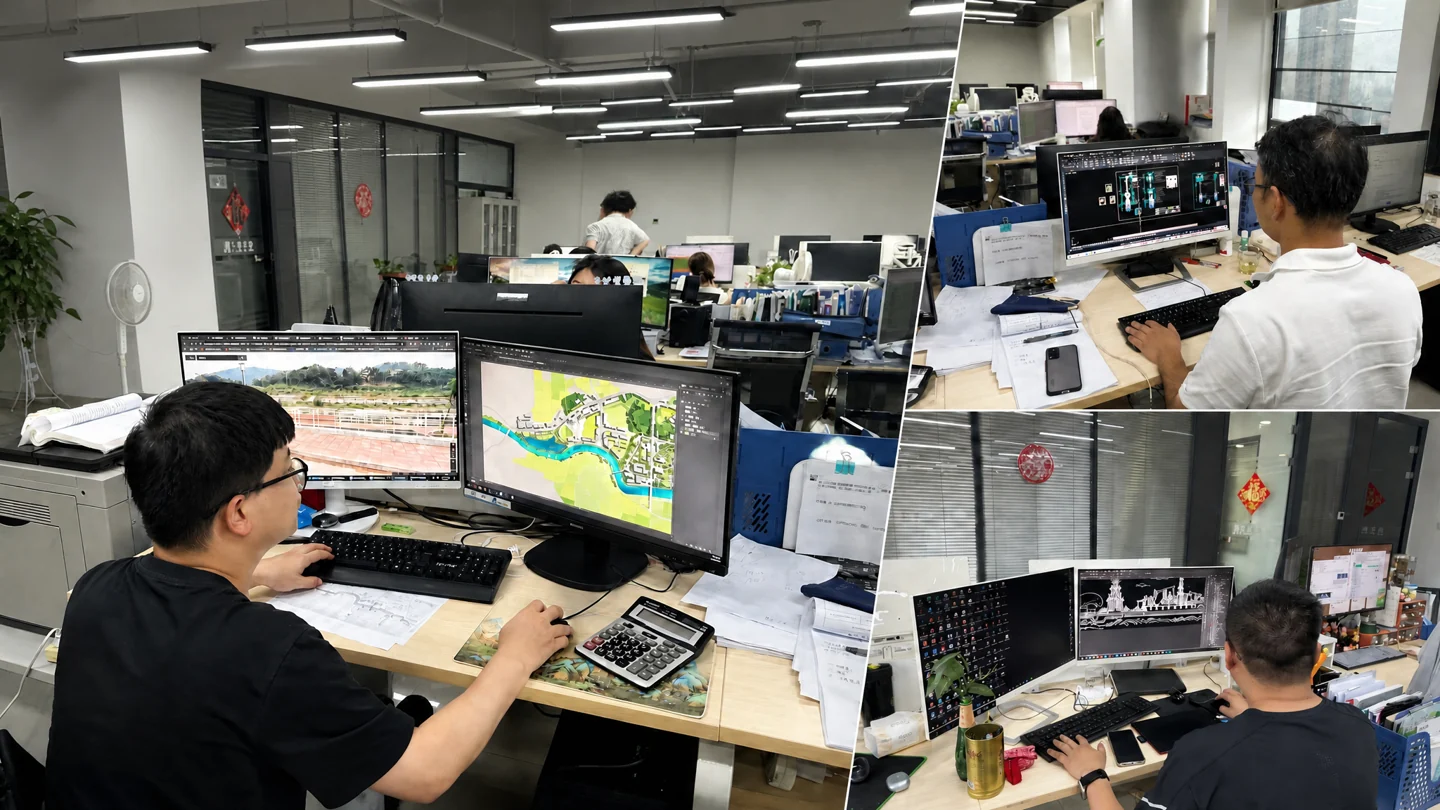
Coordinate water supply, circulation and drainage
Separate the display circulation circuit from make-up water, treatment circulation, overflow, drainage and any backwash arrangement. Show where each line starts and ends. A recirculating display still needs provision for losses, cleaning and controlled draining; it should not be specified as a system with no water consumption.
- Water source and make-up: record supply conditions and water quality, determine the required treatment, and have the responsible designer specify any backflow protection required locally.
- Basin or collection tank: coordinate operating levels, usable volume, low-water monitoring and accessible cleaning points with the effect layout.
- Return and overflow: assess simultaneous display flow, splash recovery and, for outdoor sites, the drainage design conditions agreed with the civil engineer. Do not assume a return line automatically serves as storm drainage.
- Water management: assign responsibility for filtration, treatment, sampling where required and operating records according to the intended exposure and destination requirements.
Confirm the maintenance method before concealing pipework. Isolation points, removable sections and drain locations should allow routine servicing without dismantling architectural finishes.
Select pumps from flow and total head, not motor power alone
Build a nozzle-group schedule showing each effect’s required flow, nozzle inlet condition and operating combination. The selected pump must meet the resulting duty point after elevation differences and pipe, valve and fitting losses are considered. Assess the pump curve together with the system requirements; the largest motor is not automatically the right selection. The US Department of Energy’s pump-system resources describe this system-level approach.
- Required flow
- Use the approved nozzle data and the number of effects operating simultaneously. State the design flow in consistent units, such as m³/h.
- Total head and pump curve
- Record the required head in metres and the selected pump’s operating point. Check efficiency and the manufacturer’s operating limits for the relevant show modes.
- Suction and installation conditions
- Review operating water level, inlet arrangement, submergence or suction conditions, and access. For applicable pump configurations, assess available versus required net positive suction head using the manufacturer’s data.
- Materials and serviceability
- Select materials and seals for the actual water chemistry and installation environment. Include the method of retrieving or servicing the pump.
- Speed control
- Where a VFD frequency converter is proposed, confirm motor compatibility, the usable speed range and how speed changes affect the nozzle group. Agree minimum operating conditions and protective responses.
Request a pump schedule listing the model, flow, head, rated power, supply requirements and control method. Keep installed electrical capacity separate from estimated operating energy. For budgeting the latter, use the actual operating schedule and our fountain electricity cost guide.
Define the PLC, DMX512 and show-control responsibilities
The control design should identify which device commands each component and what happens if a signal is lost. A PLC control cabinet may coordinate pump groups, valves, operating modes and monitored conditions. DMX512 is a control-data interface for compatible lighting equipment and accessories; it is not a substitute for the electrical protection or safety functions required by the installation. ESTA maintains the relevant control-protocol standards.
- Control schedule: document PLC inputs and outputs, pump/VFD groups, valve zones, lighting addresses and the interfaces to audio, projection or other show equipment.
- Show timing: agree the cue source, synchronization method, start and stop sequence, and the procedure for recovering after an interrupted show.
- Operating states: distinguish automatic performance, manual service mode and shutdown. Define the responses to low water, equipment faults and relevant site conditions.
- Electrical coordination: have qualified designers confirm supply, protection, earthing or bonding, cable routing and equipment suitability under applicable local requirements.
- Handover: provide approved drawings, address lists, controller backups, access arrangements and instructions for restoring the agreed configuration.
Move from concept drawings to installation and acceptance
- Concept and feasibility: agree the application, visual reference, users, operating hours, site constraints and budget scope.
- Coordinated design: develop hydraulic layouts, levels, pump schedules, electrical loads, controls and structural and waterproofing interfaces.
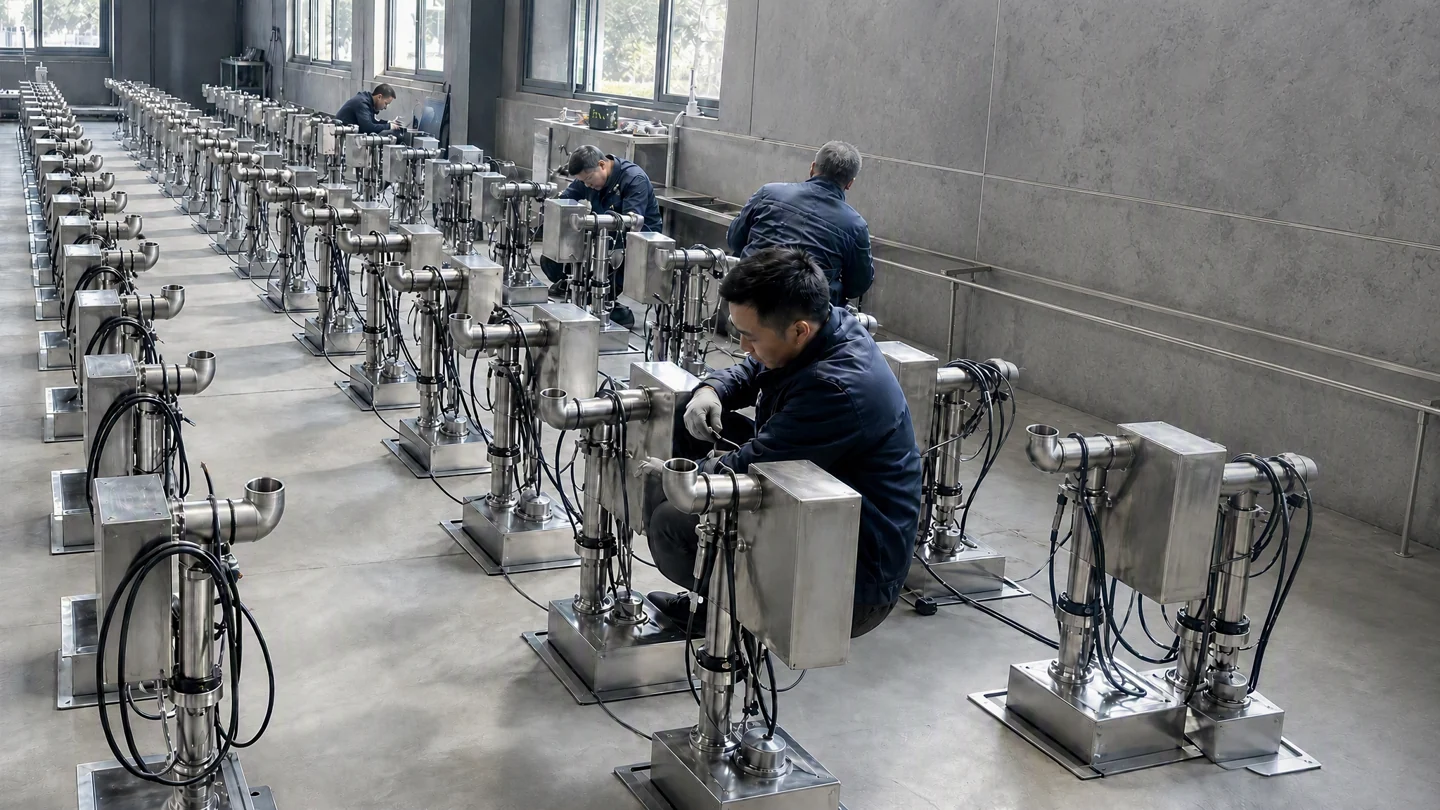
- Procurement and workshop checks: approve drawings and component schedules, define inspection points and confirm shipping and installation responsibilities.
- Site readiness: verify the agreed basin or chamber dimensions, power, drainage, access and construction interfaces before equipment installation.
- Commissioning: test the agreed operating modes, water effects, lighting cues, monitored conditions and maintenance access against documented acceptance criteria.
- Handover: supply as-built information, settings, maintenance instructions, spare-parts lists and operator training within the contracted scope.
Use the installation readiness checklist and factory acceptance and overseas support guide to make responsibilities explicit. For an overseas project, choose local-contractor cooperation or a Lishi-managed turnkey scope, then identify site interfaces, permits and responsibilities in the contract.
What information should an owner send for an engineering proposal?
Send a marked-up site plan with dimensions and levels, photographs, the intended effect, expected users, operating hours, water-source information and known electrical supply. For an interior feature, include mounting and building-services constraints. For a water show, include audience positions and the proposed audio, lighting and projection scope. Mark unknowns instead of supplying guessed figures.
The project brief checklist helps organize these inputs. Review our Karamay Century Park project photographs for an installed public-space reference, and the operating video case library for water-effect examples. These references support a visual discussion; the proposed project’s dimensions and performance must be established separately.
Commercial water feature engineering questions
Can an equipment-only quotation cover the whole project?
Not unless the scope explicitly includes the other work. Compare civil construction, waterproofing, structural supports, supply and drainage connections, electrical distribution, shipping, installation, commissioning and training as separate scope items. This makes exclusions visible before a purchase is approved.
Can the same pump and control package be used for every fountain?
No universal package follows from the term “water feature fountain.” Nozzle duty, simultaneous effects, levels, pipework, water conditions and control interfaces determine the selection. A digital lobby curtain and an outdoor musical plaza need different design inputs and acceptance tests.
How should maintenance be planned?
Plan access, isolation, cleaning, consumables and spare parts during design. Build the operating schedule around the installed equipment, site conditions, use and local requirements, with clear responsibilities. The maintenance planning guide provides a starting checklist rather than a universal cleaning interval.
Discuss a commercial or municipal water feature project with our engineering team. Include the available drawings and intended operating requirements so the review can address the real site.