
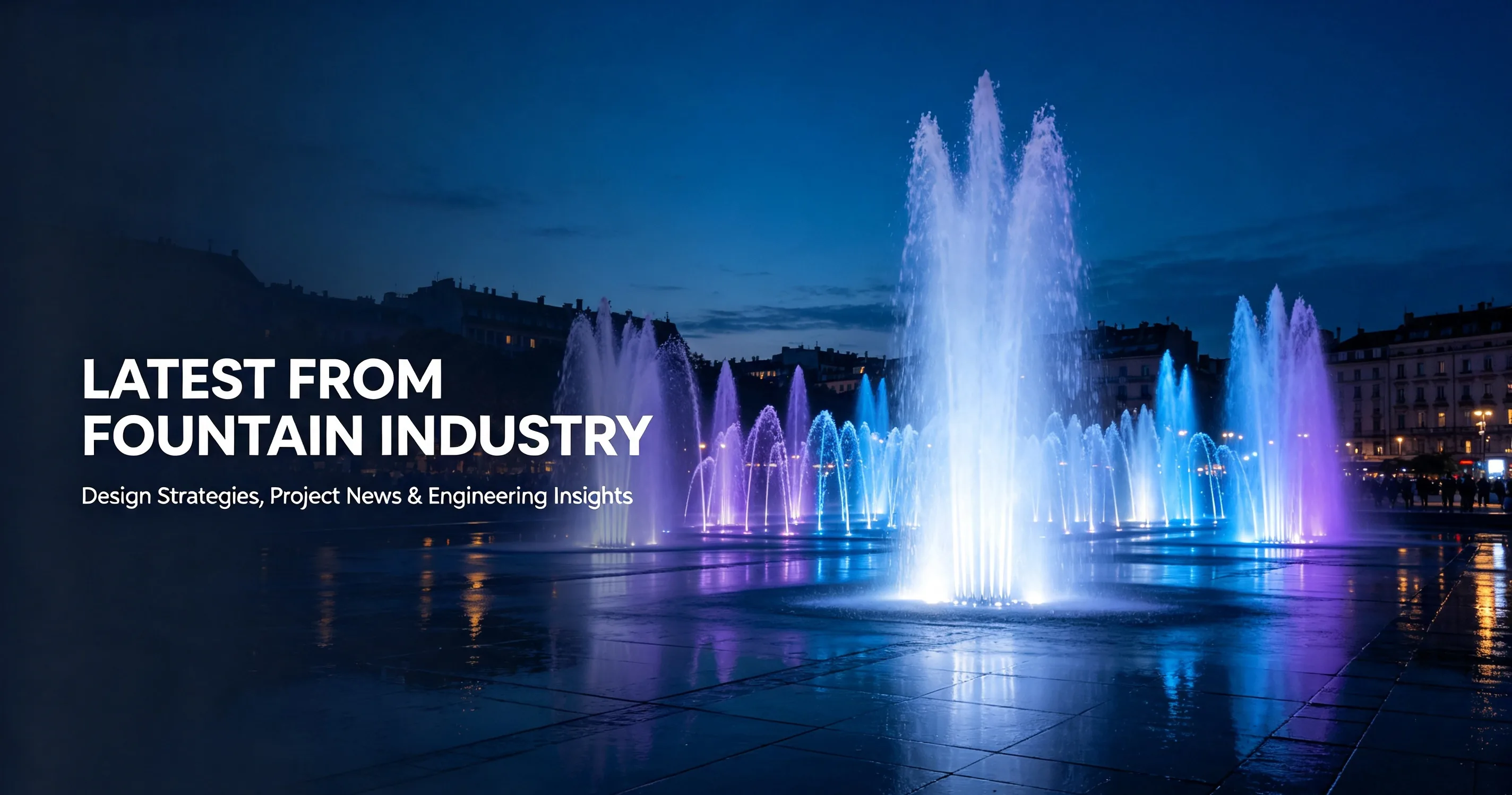
Water Screen Light Projection Show
With the rapid development of the cultural tourism night tour industry, water screen light projection shows have become core projects for scenic spots, urban landmarks and commercial complexes to create night tour highlights, attract visitors and boost revenue. Taking a dynamic water screen as the imaging carrier and combining laser projection, colorful lighting, stereo sound effects and 3D digital content, it can deliver a naked-eye immersive light and shadow experience with strong artistic appeal and visual impact. Professional design of water screen light projection shows is the key to stable performance, high-definition images and outstanding atmosphere. This paper systematically elaborates on the design principles, standardized processes, core specifications and pitfalls-avoiding tips of water screen projection shows, providing professional references for the implementation of various night tour light and shadow projects.
I. Core Principles and Design Advantages of Water Screen Light Projection Shows
A water screen light projection show is a comprehensive performance project integrating hydraulic engineering, light and shadow technology, digital content and intelligent control. Its core working principle: high-pressure water pumps and precision atomizing nozzles form a flat suspended water screen. High-brightness laser projection equipment casts customized images onto the surface of the water screen. Paired with lighting, lasers and synchronized music, it creates a three-dimensional light and shadow performance effect blending virtuality and reality.
Compared with traditional stage light shows and fixed large-screen projection, professionally designed water screen light projection shows boast remarkable advantages and fit a wide range of night tour scenarios:
- Unique visual texture: Free from physical frame constraints, the water mist screen is transparent and lightweight, producing suspended three-dimensional images with a hazy atmospheric effect and prominent naked-eye 3D results. Its viewing experience far surpasses that of conventional static screens.
- Wide scenario adaptability: It can be built on lakes, river channels and artificial pools without large-scale civil engineering renovation, suitable for urban squares, cultural tourism scenic areas, theme parks, commercial night tours, festival events and other occasions.
- Strong attraction and communication potential: Boasting striking visual impact and high photo-worthiness, it easily encourages tourists to check in and share clips on short-video platforms, rapidly raising venue popularity and passenger flow. It serves as a high-quality monetization project for the night tour economy.
- High flexibility and controllability: Custom exclusive thematic content of 8–15 minutes is available. It supports one-click switching of images and lighting rhythms, adapting to regular exhibitions, festival special performances and commercial activities.
- Outstanding cost performance: The equipment is durable with low operation and maintenance costs. Once installed, it can run performances on a long-term loop. Compared with large-scale live-action performances, it requires lower investment and has a shorter implementation cycle.
II. Complete Design Process of Water Screen Light Projection Shows (Standardized Implementation)
High-quality water screen light projection shows reject templated design and require customized development according to site conditions and project positioning. The entire standardized design workflow consists of five core stages to fully guarantee stable project delivery and excellent viewing experience.
1. Site Survey and Demand Positioning Stage
Preliminary survey and demand positioning lay the foundation for project implementation. Designers need to conduct on-site surveys of water area, water depth and water source conditions. Natural lake water and reclaimed water must be equipped with filtration systems to prevent sediment from clogging nozzles, which would cause uneven water screens and distorted images. Meanwhile, projection distances and equipment installation positions should be precisely measured, and nighttime illumination and wind conditions inspected to avoid interference of strong winds and intense light with imaging effects.
Project core positioning shall also be defined: cultural tourism projects focus on Chinese-style landscapes and regional culture; commercial scenarios feature technological, trendy and cool styles; urban landmarks emphasize the display of cultural heritage. Performance duration, playback frequency and core themes are determined to set the tone for subsequent design.
2. Water Screen System Structural Design Stage
Water screen flatness directly determines projection clarity and constitutes a core hardware component. The mainstream types in the industry include fan-shaped water screens, linear water screens and fog screens. Among them, fan-shaped water screens deliver stable forming and wide coverage, fitting over 90% of outdoor projects with the best cost performance.
Design requires precise adjustment of pump power to ensure the water screen is even, continuous, free of breaks and density differences, and to avoid fragmented images caused by excessive water flow. Supporting water circulation, filtration and voltage stabilization systems are deployed to achieve water-saving operation and cut maintenance costs. In addition, the water screen width is customized according to site dimensions to accurately match the parameters of projection equipment and eliminate problems such as dim and blurry images caused by an oversized screen.
3. Light and Shadow Equipment System Matching Design Stage
Scientific matching of light and shadow equipment is critical to improving performance texture, mainly covering four systems: projection, lighting, laser and intelligent central control.
For projection equipment, ALPD laser light source high-lumen projectors are preferred for their anti-interference capability, long service life and high color reproduction. Conventional outdoor scenarios require no less than 20,000 lumens for water screens within 30 meters; sites with strong urban light and extra-wide open spaces need ≥30,000 lumens to prevent washed-out images and missing details. Projection distance is strictly calculated per standard formulas with safety margins reserved to avoid image distortion and blurriness.
The lighting system adopts RGB full-color lamps. Gradient, follow-spot and flickering effects are designed in line with music and image rhythms. The collocation of warm and cold tones creates layered atmosphere. Colored laser beams are supplemented to form aerial light and shadow lines, constructing a multi-dimensional three-dimensional light and shadow space. All equipment connects to the intelligent central control to realize millisecond-level linkage among water screen, projection, lighting and music. Timed playback and remote control are supported for convenient and efficient operation.
4. Digital Content Customization Design Stage
Hardware lays the foundation while content endows performances with soul. To avoid homogenization, water screen projection shows require customized thematic scripts. The industry standard performance duration is 8–15 minutes, matching tourists’ sightseeing pace and enabling loop playback without redundancy. The minimum image resolution is 1080P, and 4K ultra-high definition production is adopted for high-end projects to guarantee sharp image details and refined viewing experience.
There are three mainstream content styles: Chinese-style cultural tourism integrates ink-wash landscapes and folk historical elements to build a poetic immersive realm; the tech style uses 3D modeling, particle special effects and dynamic geometric graphics to create a futuristic vibe; the commercial trendy style combines brand IP and trendy animations to meet commercial drainage demands. All images must be precisely synchronized with audio and lighting rhythms, combining motion and stillness and progressing layer by layer to form a complete performance narrative.
5. Commissioning, Optimization and Delivery Acceptance Stage
After equipment installation, refined debugging and calibration are carried out: adjusting projection focal length and angle to solve ghosting and distortion; fine-tuning pump pressure to improve water screen flatness; polishing the linkage rhythm of lighting, lasers and music. Debugging is also performed for different wind and nighttime light conditions to ensure stable performance under various weather conditions. Final acceptance is completed against industry standards and client requirements, with operation and maintenance schemes delivered.
III. Core Design Standards and Pitfall-Avoiding Points for Water Screen Light Projection Shows
Most problems of water screen projection projects, such as blurry images, broken water screens, out-of-sync light and shadow and cheap visual texture, stem from substandard design parameters and inadequate detail control. The following core design standards and tips help effectively deliver high-quality projects:
- Brightness matching standard: Equipment lumen ≥20,000 for basic outdoor scenarios, ≥30,000 for bright open areas to prevent washed-out images and lost details.
- Water screen forming standard: Complete and unbroken screen surface with uniform thickness and neat edges; stable forming within Force 4 wind without excessive drifting water mist.
- Image quality standard: No chromatic aberration, ghosting or stuttering; smooth dynamic imaging, supporting high-definition shooting and sharing via mobile phones.
- Linkage synchronization standard: Millisecond-level synchronization of images, lighting, lasers and music with natural transitions and no delay for consistent overall atmosphere.
