
Water Screen Projection Show Design
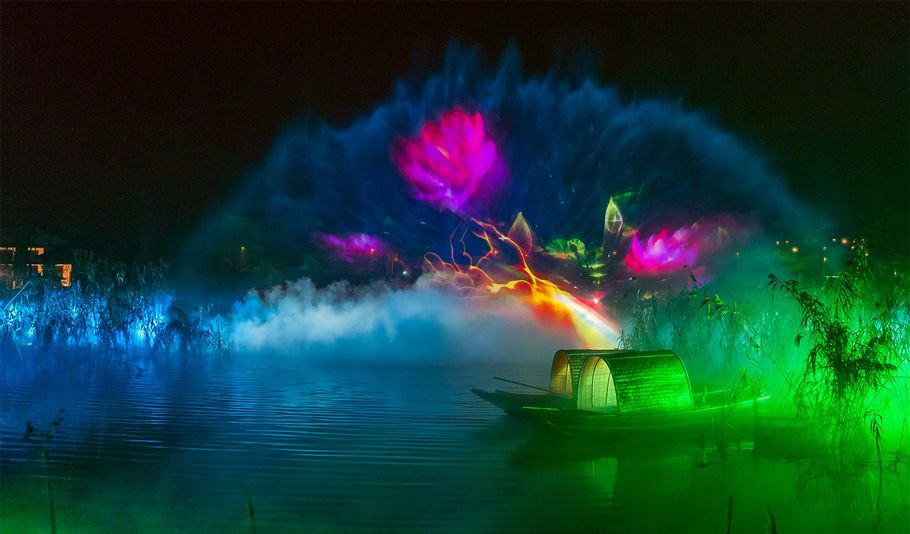
Water screen projection show design represents a core light and shadow art form for cultural tourism night tours, commercial plazas, scenic area upgrades and urban lighting projects. Leveraging high-pressure water mist screen generation, high-definition projection imaging, and linked lighting & audio technologies, it delivers an immersive visual feast blending virtual and real elements with a three-dimensional dreamlike quality. Well-designed water screen projection shows can not only elevate the texture of a venue’s nightscape, but also create internet-famous check-in landmarks, boost the night-time economy and enhance the brand influence of projects. They have become the preferred night tour format for major cultural tourism developments and commercial spaces.
I. What is Water Screen Projection Show Design
Water screen projection show design is a comprehensive custom design service integrating waterscape engineering, digital light and shadow technology, artistic choreography and sound effects. Different from conventional stage projection, it takes flowing water mist screens as the imaging carrier, paired with professional high-definition engineering projectors, laser light sources, control systems and audio systems, to achieve oversized, translucent, three-dimensional, dynamic and vivid light and shadow effects.
Its core design principle: high-pressure water mist equipment atomizes water flow to form a uniform, flat and suspended three-dimensional water screen. Relying on the diffuse reflection imaging property of water mist particles, customized video materials, dynamic special effects and 3D animations are projected onto the water screen. Combined with background music, laser lighting and fog effects, it produces an immersive performance integrating sound, light, water, electricity and visuals.
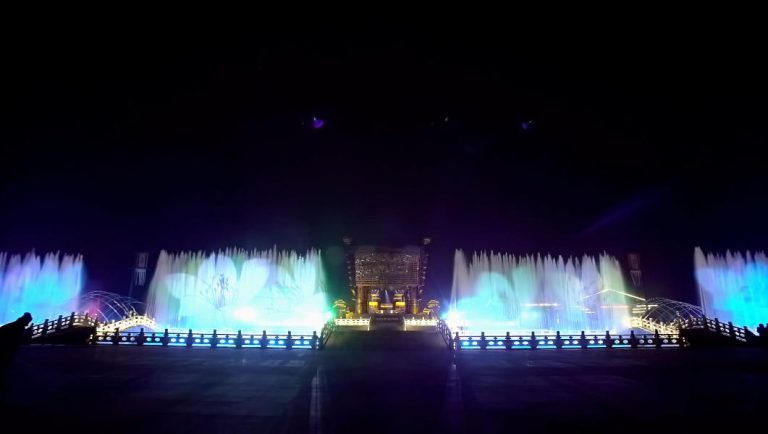
Compared with traditional LED screens and wall projection, the most prominent feature of water screen projection shows is the translucent and soft visuals with no physical obstruction and strong atmosphere. The water screen flows and changes dynamically, light and shadow blend naturally with the waterscape to form rich visual layers, which meets the night display requirements of large outdoor venues.
II. Core Workflow of Water Screen Projection Show Design
Professional water screen projection design rejects template-based solutions. Custom plans are developed according to site conditions, project positioning and budget scale. The complete implementation process consists of five core stages to guarantee both visual performance and constructability.
1. Site Survey and Demand Positioning
The primary task in the early design phase is on-site survey. Key data including water area, water depth, site dimensions, surrounding buildings, wind conditions, power supply and audience viewing angles are recorded. Meanwhile, project positioning is defined based on requirements: scenic spot visitor attraction type, urban lighting type, commercial event type, festival custom type, regular performance type, etc. Performance duration, playback frequency and core theme are confirmed to lay a foundation for subsequent design work.
2. Overall Scheme Planning and Equipment Selection
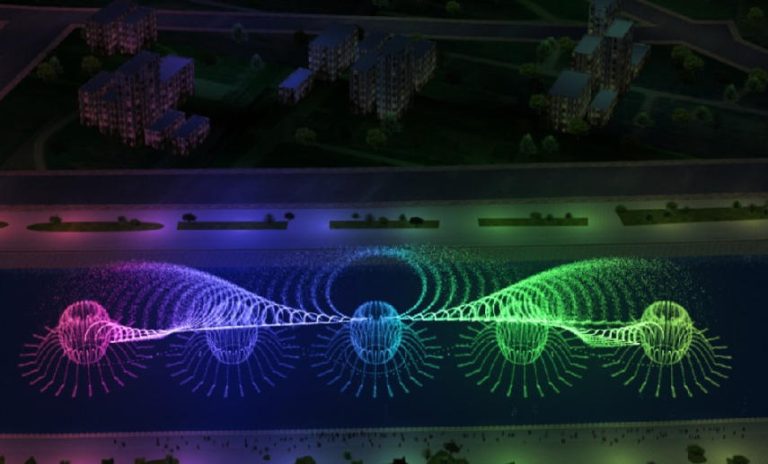
Overall scheme planning is completed based on survey data, covering water screen system design, projection equipment selection, lighting and audio matching, wiring layout and equipment protection design. Equipment selection is critical. High-lumen laser projectors are preferred for outdoor scenarios, featuring strong resistance to strong light, wind and rain, and high stability. Water screen equipment falls into fan-shaped water screens, rectangular water screens and giant three-dimensional water screens. Specifications are matched to site size to ensure complete and uninterrupted imaging. Waterproof, lightning-proof, dust-proof and anti-freezing designs are adopted to adapt to all-weather outdoor operation.
3. Themed Content Creation and Video Production
Light and shadow content is the soul of water screen projection shows and the core of differentiated design. The design team develops exclusive 3D light and shadow video content customized to the project’s regional culture, urban characteristics, brand philosophy and festival themes. Materials include landscape scenery, cultural stories, dynamic effects, popular science animations, brand promotion and festival visuals. Video frames are optimized to suit water screen imaging characteristics, adjusting color contrast, aspect ratio and motion rhythm to avoid blurriness, ghosting and stuttering, ensuring good viewing experience from long distances.
4. System Integration and Linked Programming
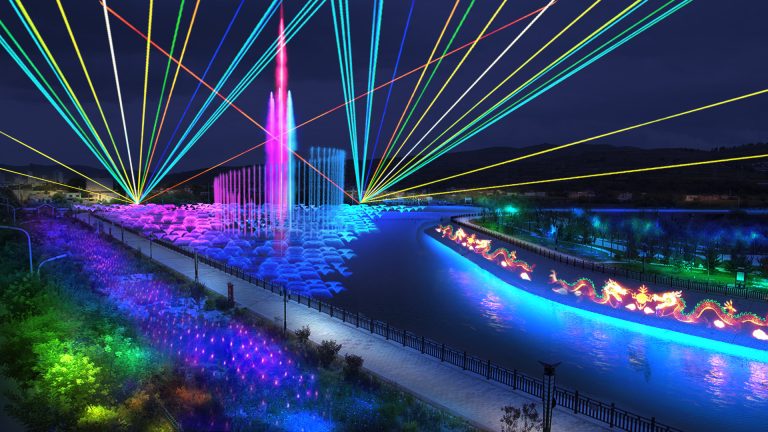
After hardware layout and content production, full-system integration and commissioning are carried out. Synchronized programming is implemented for water screen activation/deactivation, projection playback, lighting switching, audio rhythm and laser effects, supporting one-key start/stop, automatic looping, scheduled playback and remote control. The rhythm of light, shadow and music is precisely calibrated to align moving visuals, lighting shifts and audio fluctuations, improving the immersion and artistic quality of the performance.
5. On-site Commissioning, Acceptance and Operation & Maintenance Training
Multiple rounds of on-site commissioning are conducted after equipment installation. Imaging quality is optimized according to light conditions, wind speed and water flow at different times, adjusting image sharpness, color brightness and water screen flatness. After project acceptance, training on equipment operation, routine maintenance and troubleshooting is provided, together with long-term operation and maintenance support to ensure stable long-term operation of the water screen projection show.