Music Fountain Water Show Design
I. What Is Musical Fountain Show Design?
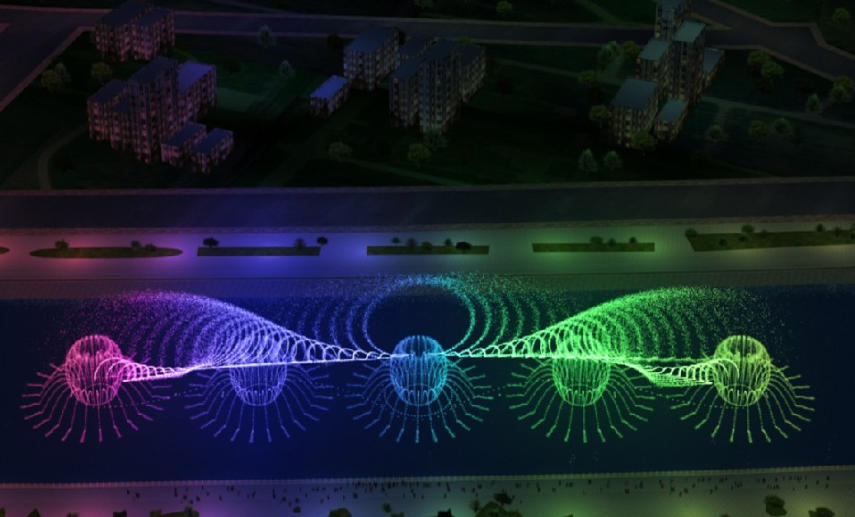
Musical fountain show design centers on the precise synchronization of three key elements—water, light, and sound—transforming fountains from mere landscape installations into dynamic, narrative-driven performances. It synchronizes water patterns with the rhythm and emotion of the music to create a dual audiovisual experience. A comprehensive design includes five major systems: water patterns, lighting, music, intelligent control, and water treatment and circulation. The key challenge lies in achieving “synchronization.”
II. Four Core Systems
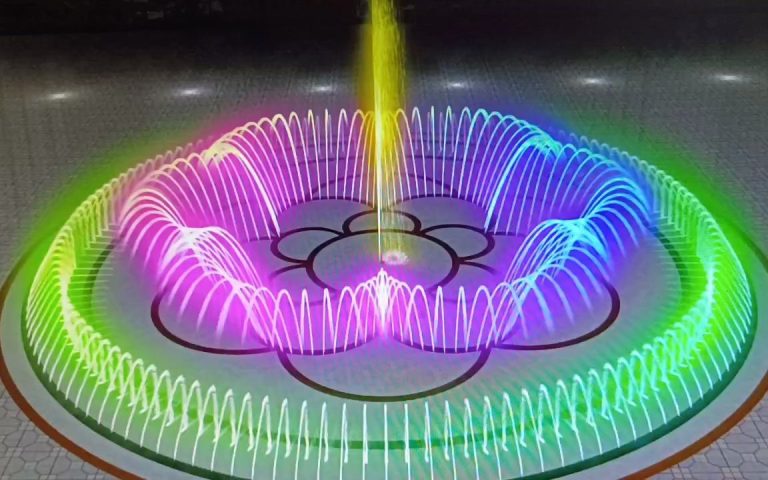
1. Water Form System (Choreography): Straight water jets correspond to strong beats, swaying nozzles to lyrical passages, running/jumping fountains to continuous rhythms, air-burst nozzles to create climactic highlights, and misting nozzles to evoke the lingering resonance of the finale. Limiting core water forms to 5–7 types and carefully choreographing them yields better results than simply filling the space with 20 different types.
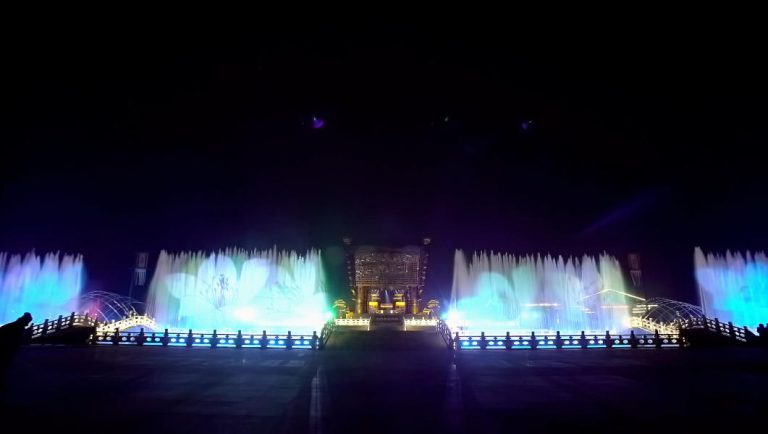
2. Lighting System (Color and Aesthetics): Underwater LED lights illuminate the water jets; beam lights penetrate the water curtain; color-changing lights set the mood; and lasers/projections are used for water curtain projections. Cool tones are used for low-key musical passages, while warm, bright tones are used for energetic sections, with the lighting evolving in sync with the music’s emotional flow.
3. Music Arrangement (Soul): Prefer symphonic and electronic music with a clear rhythm; 3–5 tracks per show with a total duration of 15–25 minutes. Emotional fluctuations between tracks create a cohesive narrative.
4. Intelligent Control (Brain): Utilizes a dual-redundant architecture of PLC + host computer, converting music into control signals via MIDI/audio parsing. Industry standards: pump response ≤ 0.3 seconds; stepless adjustment of variable-frequency pumps; integrated DMX512 programming; and the ability to preset and flexibly switch between multiple programs.
III. Design Process (6 Steps)
Site Survey and Location Selection → Theme and Concept Design → Water Feature and Lighting Design → Control System Programming → Equipment Selection and Detailed Construction Drawings → Installation, Commissioning, and Acceptance.
IV. Core Principles
Narrative-driven with regional integration; avoids purely technical displays; seamless integration of water and light with millisecond-level synchronization; prioritizes the audience’s perspective, ensuring spray height matches viewing distance; balances visual impact, energy consumption, and long-term operation and maintenance.
V. Application Scenarios
Urban plazas (large scale, impressive spray height); cultural and tourism attractions (water screen movies, laser shows to attract visitors); commercial complexes (interactive dry fountains); high-end hotels (serene and elegant, immersive water features).
VI. Factors Affecting Pricing
Water surface area, spray height, and nozzle type (air-burst / water curtain systems are more expensive); lighting configuration (laser / projection); the level of intelligence in the control system; and civil engineering, electrical, and plumbing conditions. It is recommended to select a system based on a comprehensive evaluation of “visual effects + budget + operation and maintenance.”
VII. Conclusion
A successful musical fountain show is a comprehensive work that combines artistic creativity, engineering technology, and intelligent control. It is recommended to select a professional fountain company with one-stop capabilities in solution design, equipment manufacturing, construction, and commissioning to ensure full control from the initial concept to final acceptance.