
Design of Lake Musical Fountain — Floating Water Show Integrating Water, Light and Music
A lakeside musical fountain is not simply a scaled-up version of a swimming pool fountain; rather, it is a floating performance system specifically designed for open, flowing bodies of water exposed to the natural environment.
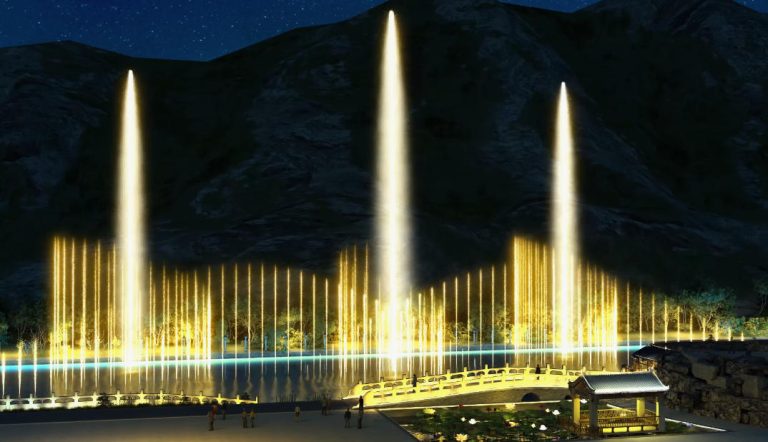
We will transform open waters into a vibrant and dynamic stage—where water jets, lighting, and music blend together in perfect harmony. Tailored specifically for lakes, reservoirs, and large ponds that were never originally designed for performances.
Design Challenges for Lakeside Musical Fountains
The inherent challenges of open water—such as wind, waves, water level fluctuations, silt, and weather conditions—are challenges that controlled swimming pools have never faced. A successful lakeside musical fountain is a structurally stable, electrically safe, and clearly visible floating performance system from the shore.
1. Hydrological Survey
First, survey the lake’s surface area, depth profile, water clarity, prevailing wind directions, and freeze-thaw cycles. These factors determine the nozzle height, float size, and lighting projection distance even before any equipment is selected.
2. Floating Platform Engineering
Modular HDPE floats with built-in buoyancy and a stainless steel frame ensure that the nozzles remain level despite wind, waves, and water level fluctuations. Depending on local wave loads, the system is anchored using either a suspended chain or a pile-based mooring system.
3. Water Show Choreography
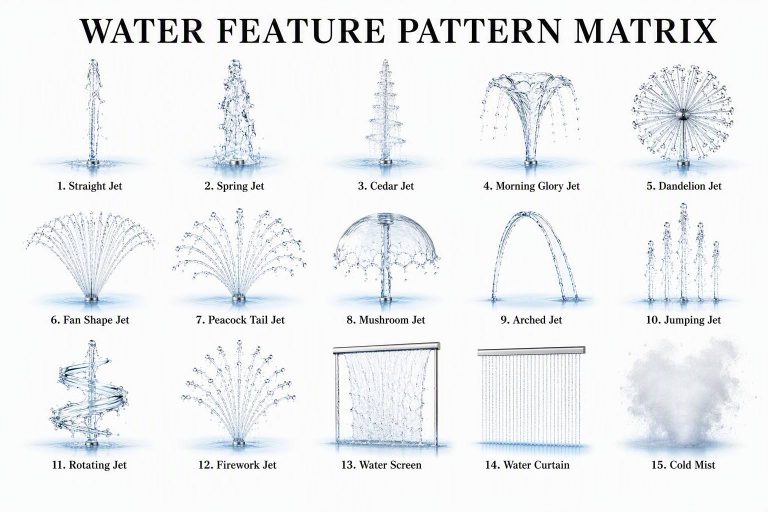
Rather than choreographing the nozzle arrays—including single-row jets, fan patterns, laminar flow, mist effects, and floating halos—into sequences synchronized with music, we arrange them into random patterns. Our goal is to create silhouettes that are clearly visible from 50 to 300 meters away.
4. Lighting Design
We use IP68-rated waterproof RGB full-color LED lights that support DMX dimming, selected based on beam angles and color-blending effects under an open sky. We balance projection distance with glare issues to ensure the water surface is “shaped by light” rather than becoming a blinding spotlight.
5. Music and Control System
A spectrum analysis engine drives the pumps and valve assemblies, synchronizing in real time with the audio. Performance effects are stored as presets and can be run remotely or on a scheduled basis; once set up, no on-site DJ is required.
6. Waterfront Sound System
We install speaker arrays along the shoreline or on floating platforms, equipped with weatherproof enclosures and time-delay calibration to ensure that sound reaches the audience’s ears in sync with the water curtain—rather than as a delayed echo.
Typical Configurations
Every lake is unique, but most projects fall into one of the following four tiers—final specifications are determined by a hydrological survey.
Entry-Level · Studio
Lake Area: 100–500 m² · Nozzle Groups: 3–6 · Pumps: 7.5–22 kW
Lighting: 12–30 IP68-rated fixtures · Control: Basic DMX presets
Suitable for refined landscapes such as small scenic lakes, community ponds, and hotel lakes.
Standard · Functional
Lake Area: 500–1,500 m² · Nozzle Groups: 6–14 · Pumps: 22–75 kW
Lighting: 30–80 IP68-rated fixtures · Control: Music synchronization, 8 preset programs
Suitable for lakes in urban parks, main lakes at resorts, and water features in commercial complexes.
Landmark
Water Area: 1,500–4,000 m² · Nozzle Groups: 14–30 · Pumps: 75–220 kW
Lighting: 80–200 IP68-rated fixtures · Control: Music synchronization, 20+ preset programs
Suitable for municipal landmark lakes, large scenic areas, and waterfront “urban living room” projects.
Showcase
Lake Area: 4,000 m² and above · Nozzle Groups: 30+ · Pumps: 220 kW and above
Lighting: 200+ fixtures, including lasers · Control: Full-media server
Suitable for super-large reservoirs, cross-regional tourist destinations, and integrated water dance performances at urban landmarks.
Pump options include submersible pumps (simpler in design, quieter, and installed in the lake) or shore-based pumps (easier to maintain and with a longer service life). We will provide recommendations based on water depth, accessibility, and winter operating conditions. When performance requirements call for high inflow rates or the lake ecosystem is particularly sensitive, we will incorporate filtration and recirculation systems.
Suitable Scenarios
Designed specifically for waterfront areas where people naturally gather.
Urban Lakes and Squares—Municipal landmarks and nighttime gathering spots that support regular performances.
Resort Hotels—Iconic nighttime water dance performances that extend guest stays and boost social media engagement.
Waterfront Real Estate—Complementary, performance-grade water features that enhance the perceived value of lakeside development projects.
Parks and Scenic Areas—Seasonal and holiday events for regional tourist destinations.