
How Is a Light and Water Screen Projection Show Set Up?
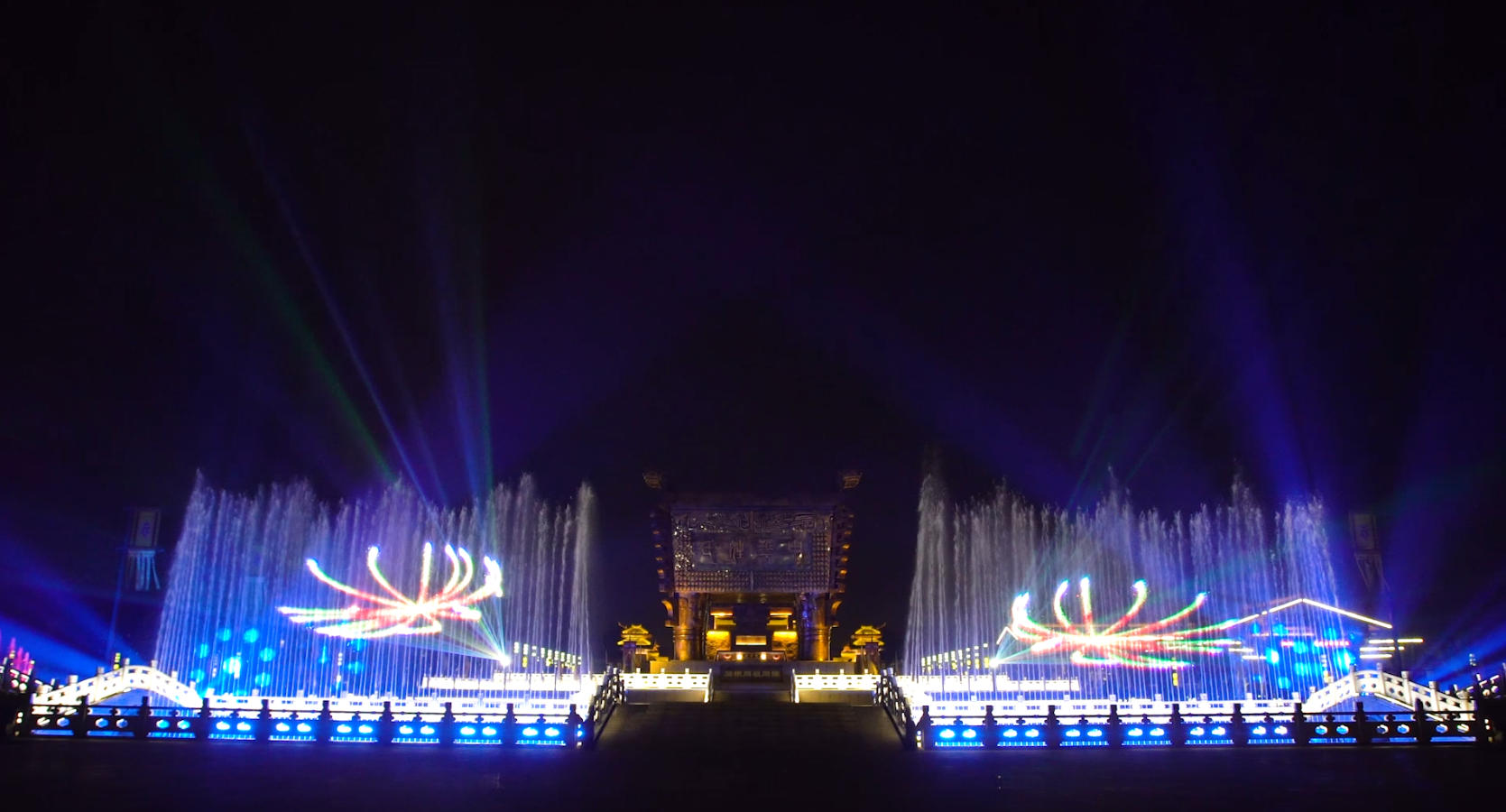
Many people only see how spectacular the water screen show is, but fail to realize just how meticulous the setup process is behind the scenes. Let’s get straight to the point—we generally follow these 7 steps to set up a light and water screen projection show.
Step 1 On-Site Reconnaissance + Layout and Positioning The design drawings do not necessarily match the actual site. The first thing to do upon arrival is to conduct an on-site reconnaissance using the drawings: verify the water boundaries, water depth, power supply points, control room location, and audience area—check everything on-site. Then, lay out and mark the positions—nozzle arrays, floating anchor points, projector positions, and lighting positions—using GPS or a total station to achieve millimeter-level accuracy. If this step is done incorrectly, everything that follows will be off.
Step 2: Foundation and Utility Connections First, pour or assemble the foundations for the onshore control room and power distribution cabinets; simultaneously, pre-install underwater and shoreline cable trenches, as well as water supply and drainage pipes. Allow ample power capacity (as the peak power consumption of pumps, projectors, and lighting combined is significant), and install independent grounding and lightning protection. This step represents the “invisible foundation” of the project.
Step 3: On-Site Assembly of Modular Equipment This is the core advantage of the source factory: nozzles, pump assemblies, valve assemblies, and control cabinets are prefabricated, pressure-tested, and aged-tested at the factory; upon arrival, they are “modules,” not “parts.” The above-water components are assembled using modular floats or fixed steel brackets, while shore-based equipment is mounted on racks in the control room. On-site assembly involves assembling like building blocks, not on-the-spot welding or splicing.
Step 4: Pipeline Installation and System Wiring. Water supply and return pipes are spliced, sealed, and pressure-tested; power cables and control buses (DMX/network) are routed in separate conduits, with high- and low-voltage circuits isolated. All underwater joints are waterproofed and double-sealed. Each circuit is numbered and tagged for easy identification during future operation and maintenance.
Step 5 Individual Component Commissioning (Three Separate Tasks) ① Water Pattern Calibration: Adjust the angle and flow rate of each nozzle individually to ensure the water curtain is as smooth as a mirror and the spray height is consistent. ② Projector Focus: Adjust the camera position, focal length, and trapezoidal correction to ensure the image is distortion-free and color-accurate. ③ Lighting Programming: Program the underwater RGB lights, lasers, and wall-washing lights frame by frame according to the scene breakdown. Ensure each component functions independently before proceeding to synchronized testing.
Step 6 Synchronized Rehearsal: As the music plays, synchronize the five elements—water, screen, lighting, projection, and sound. Start with a slow playback to identify the beat, then run at full speed, repeating the process at least three times: check if the water patterns keep pace with the drumbeat, if the projection is obscured by water mist, and if the lighting is overpowering the visuals. All issues will be exposed and resolved during this step.
Step 7: Acceptance, Delivery, and Operations Handover—Prepare a debugging report, operating manual, and emergency response plan; train the client’s staff on startup, shutdown, and daily inspections; set up a remote maintenance channel so that adding holiday programs or performing component upgrades can be handled with a single phone call. Delivery isn’t the end—it’s the beginning of long-term support.
The romance of a water curtain show is built step by step through meticulous construction. Do you have a waterfront project in the planning stages? Tell us about your venue in the comments, and we’ll help you estimate the timeline and assess feasibility.